The wheels on a used Ram 1500 may have arrived years after the truck left the factory. A seller's photograph and a tire-shopping filter can identify the badge, but neither explains what is fitted now. Before replacing a worn set, separate the original specification from the installed wheel-and-tire combination. That distinction can prevent buying a tire that matches the advert but does not suit the truck.
Start by recording the model year, exact Ram model and the information on its tire label. The NHTSA tire guide explains where to find original tire-size information and recommends the original size or another size approved by the vehicle manufacturer. On an unmodified truck, that provides a useful starting point. On a modified truck, it is the beginning of the investigation.
Keep the factory record and the installed setup separate
Photograph the label and the complete markings on each tire. Record the wheel maker and model if they can be identified without removing parts. Keep receipts, fitment documents and any information about suspension changes together. A gap in the paperwork is something to resolve before ordering, rather than a reason to copy whichever size is currently on the vehicle.
Look up the correct model year in Mopar's vehicle resources. Check the exact vehicle, not just the word Ram. A document for a different model or generation cannot settle the specification of the pickup in front of you. If the wheel's identity is unclear, ask a tire shop to establish it safely; there is no need to crawl under an unsupported vehicle to find a marking.
The two records may disagree. That does not establish which installed part is suitable. It tells the shop which change needs checking. Keep original equipment, current equipment and the proposed replacement distinct in the quote so that an unverified modification is not silently carried forward.
A tire that is already fitted is not a fitment approval
Aftermarket wheels deserve particular attention. In its discussion of vehicles modified after sale, NHTSA describes the risk of relying on original tire information when the actual vehicle has changed, including an original tire size that is inappropriate for an aftermarket rim. The practical consequence is simple: give the fitter both records and ask for a recommendation for the actual combination.
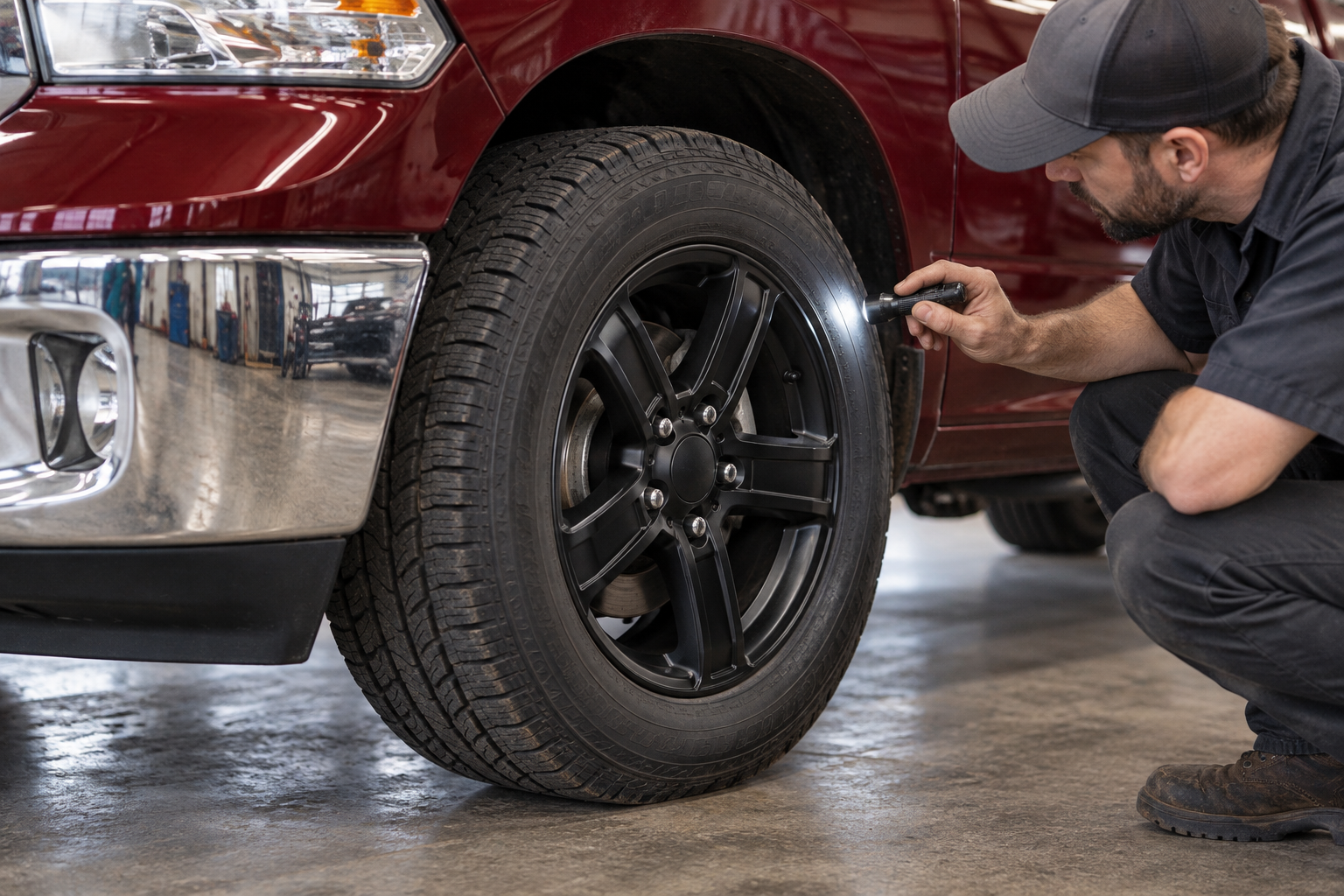
The written recommendation should identify the proposed tire and wheel compatibility, the vehicle application and any conditions attached to the recommendation. A seller saying that a set “fits a Ram” leaves those questions open. So does a photograph showing no obvious contact while the truck is parked.
Explain how the pickup will be used: commuting, regular cargo, winter travel or towing. Do not turn that description into a home-made pressure or capacity calculation. Ask the fitter to use the applicable vehicle and tire guidance for the setup, and to explain any departure from the original specification.
Compare options only after the fitment question is settled
With the required fitment established, narrow the purchase by the work the truck actually does. A comparison of Ram tires can help organize the available choices by intended use. Keep the shop's verified specification beside the shortlist: a recommendation on a general buying page does not confirm that an individual tire belongs on your wheels.
Ask the quote to name the exact product and specification, rather than only the brand or tread family. Confirm what the installation includes and how the chosen setup will be documented. If a different wheel or tire is suggested during the visit, have that change explained before accepting it.
A useful outcome is a clear record of what was checked, what will be installed and which guidance applies afterward. Keep that record with the vehicle. The next replacement should begin with known equipment, rather than another attempt to reconstruct what a previous owner changed.